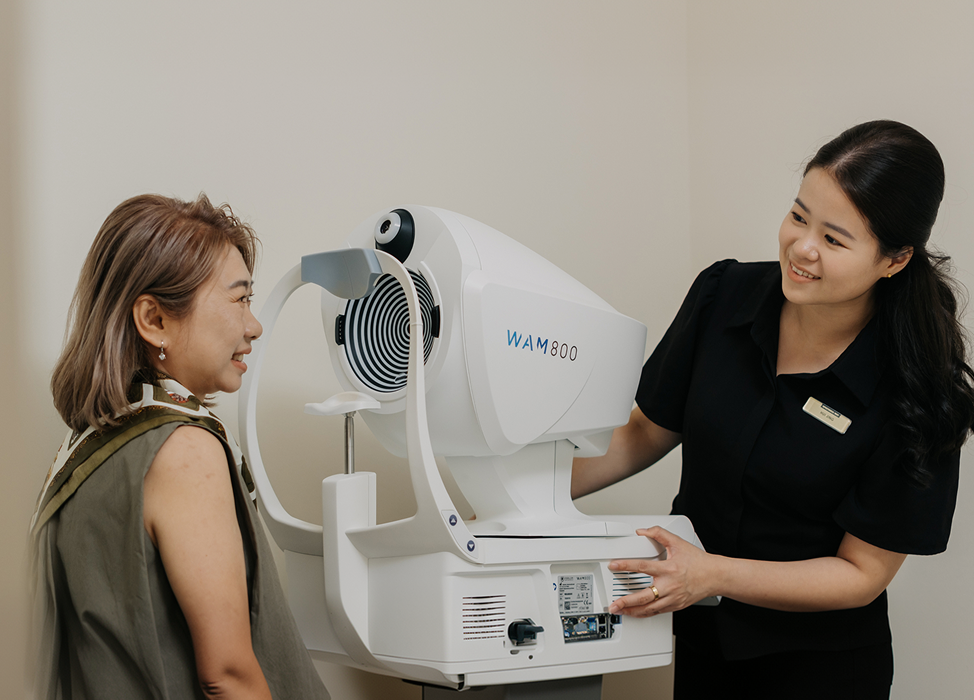
An eye examination is about much more than finding out whether you need a new pair of glasses.
Your vision can change gradually, sometimes so subtly that you learn to compensate without realising it. You may move your screen closer, squint at road signs, increase the font size on your phone, or simply accept tired eyes at the end of a long day.
A professional eye examination helps give you a clearer picture of what your eyes need today.
At Spectacle Hut, our VisionCAREPlus+ experience takes a personalized approach to eye care. Instead of treating every eye examination the same way, our Eye Care Professionals take time to understand how you use your eyes, assess your vision, and recommend personalised solutions that fit comfortably into your everyday life.
So, what actually happens when you sit down for an eye examination?
It Starts With Understanding You

Before any testing begins, your Eye Care Professional will want to know a little more about you.
That means understanding not only how clearly you can see, but how your eyes fit into your daily routine.
Do you spend most of the day looking at a computer screen? Do you drive frequently at night? Are your eyes often dry or tired? Have you noticed more glare recently? Are you having difficulty switching your focus between near and distant objects?
Even small details can provide useful context.
As part of the VisionCAREPlus+ journey, Spectacle Hut begins with a short visual profile questionnaire that helps identify your key vision needs. Your lifestyle, working environment, hobbies, driving habits, screen exposure, existing eyewear, and any visual concerns can all help guide the examination.
This first conversation gives your Eye Care Professional a better understanding of what to look for and which assessments are most relevant to you.
Checking How Clearly You See
One of the most familiar parts of an eye examination is the vision test.
You may be asked to read letters or symbols at different sizes while each eye is assessed individually. This gives your Eye Care Professional an initial understanding of how clearly you can see at different distances.
If your vision requires correction, the next step can include refraction.
During this part of the eye examination, different lens powers are compared to determine the prescription that provides comfortable, clear vision. You may hear familiar questions such as, “Is this clearer, or this?”
There is no need to worry about choosing the “perfect” answer. Your responses are considered alongside the measurements taken during the examination.
The aim is not simply to find the strongest possible prescription. It is to find a suitable level of correction that supports clear and comfortable vision.
Looking Beyond Your Prescription
Seeing clearly and having healthy eyes are related, but they are not the same thing.
You can have clear vision while changes are taking place within the eyes. This is why a comprehensive eye examination can go beyond checking your spectacle prescription.
Depending on your age, symptoms, visual needs, eye health history, and the findings during your examination, your Eye Care Professional may recommend additional assessments.
At Spectacle Hut, VisionCAREPlus+ eye examinations can include assessments such as slit lamp examination, glaucoma screening, cataract screening, myopia management screening, binocular vision assessment, colour vision assessment, and screening for conditions affecting the retina.
Not every person requires every test. The examination is tailored according to what your eyes need.
Assessing the Front of Your Eyes
A slit lamp examination allows your Eye Care Professional to take a closer look at the structures at the front of your eyes.
Using a specialised microscope and light source, areas such as the cornea, iris, lens, and surrounding structures can be examined more closely.
This can provide useful information about the condition of your eyes and help your Eye Care Professional identify anything that requires further attention.
For contact lens wearers, examining the front of the eye can also provide useful insight into ocular health and comfort.
Checking How Your Eyes Work Together
Clear vision is not only about what each eye can see on its own. Your two eyes also need to work together comfortably.
A binocular vision assessment looks at how well your eyes coordinate, focus, and work as a pair.
This can be particularly relevant if you experience symptoms such as tired eyes, headaches, difficulty concentrating on close work, or discomfort after prolonged periods of reading and screen use.
Understanding how your eyes work together can help your Eye Care Professional identify whether your symptoms are related to your prescription, visual habits, focusing ability, or another aspect of your vision.
Screening for Changes in Eye Health
Some eye conditions develop gradually and may not cause obvious symptoms in their earlier stages.
Depending on your needs, your eye examination may include screening for conditions such as glaucoma and cataracts, as well as other changes affecting eye health.
These assessments are especially valuable because a comprehensive eye examination does not rely only on how your vision feels.
Perhaps you can still read comfortably. Perhaps your glasses still seem fine. Perhaps nothing feels particularly different.
Your eyes can still benefit from being checked.
Regular eye examinations create an opportunity to identify changes, monitor your vision over time, and seek appropriate care when something requires further attention.
Talking Through What Your Results Mean
An eye examination should leave you with answers, not more questions.
Once your assessments are complete, your Eye Care Professional will explain what they have found in a clear and practical way.
If your prescription has changed, they can explain what the change means for your everyday vision. If your current prescription remains suitable, you will know that too.
If something requires monitoring or further assessment, your Eye Care Professional can guide you on the appropriate next steps.
This is also the time to ask questions.
Why do your eyes feel tired after work? Would a different lens design help with your daily routine? Is your current eyewear still suitable for night driving? Are your contact lenses contributing to discomfort? Should your child have their vision reviewed more regularly?
Understanding your eyes makes it easier to make informed decisions about your vision.
From Results to the Right Vision Solution
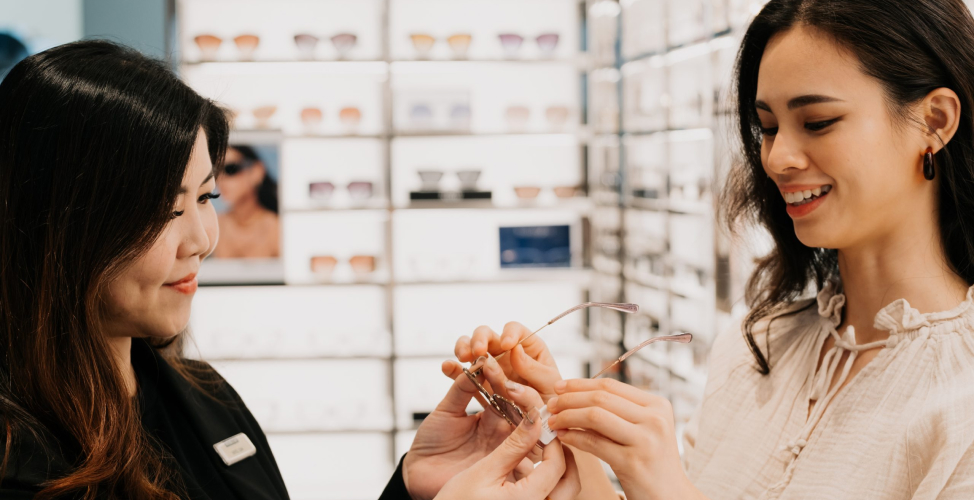
Sometimes the outcome of an eye examination is a new prescription. Sometimes it is reassurance that your current prescription is still working well.
And sometimes the answer is not simply “stronger glasses.”
Your Eye Care Professional may recommend a different type of lens based on how you use your eyes, changes to your contact lens routine, adjustments to your existing eyewear, healthier visual habits, or further eye health assessment where appropriate.
At Spectacle Hut, the recommendation comes after understanding your visual needs.
That is an important distinction.
Your prescription provides numbers. Your daily life provides context. The right solution considers both.
How Long Does an Eye Examination Take?
A comprehensive eye examination at Spectacle Hut generally takes around 30 to 45 minutes, although the actual duration depends on your individual needs and the assessments required.
It is worth giving yourself enough time rather than treating your appointment as something to squeeze between errands.
Good eye care should feel considered, not rushed.
How Should You Prepare for Your Eye Examination?
There is very little preparation required, but bringing a few things can help your Eye Care Professional better understand your vision.
Consider bringing your current spectacles and prescription sunglasses, if you use them. If you wear contact lenses, let your Eye Care Professional know what type you currently use and how often you wear them.
It also helps to think about any changes you have noticed recently.
Perhaps distant signs look less sharp than before. Maybe small text feels harder to read. Your eyes may become tired after several hours at your laptop, or headlights may feel brighter when you drive at night.
Mentioning these everyday experiences can make your eye examination more meaningful.
Do You Need an Eye Examination if Your Vision Feels Fine?
Yes, regular eye examinations are still valuable even when you have not noticed a significant change in your sight.
Vision does not always change dramatically overnight. Small prescription changes can develop gradually, and certain eye health concerns may not produce noticeable symptoms in their earlier stages.
An eye examination gives you an opportunity to understand your current vision rather than waiting until something feels wrong.
It can also establish a useful record that allows your Eye Care Professional to compare changes over time.
Your Eyes Deserve More Than a Quick Check
Your eyes support almost everything you do.
They move from your phone to your laptop, from bright outdoor sunlight to indoor spaces, from fine print to distant road signs, often without you giving the process a second thought.
A professional eye examination gives them the attention they deserve.
With Spectacle Hut VisionCAREPlus+, every journey begins by understanding you. Our Eye Care Professionals assess what your eyes need, explain what they find, and guide you towards a vision solution suited to your lifestyle.
Because better eye care is not simply about seeing the smallest line on a chart.
It is about understanding how you see, how your eyes are changing, and how to keep your vision clear and comfortable for the moments that matter.
Ready to understand your eyes better?
Book your VisionCAREPlus+ eye examination at Spectacle Hut and experience professional eye care made personal.